|
|
|
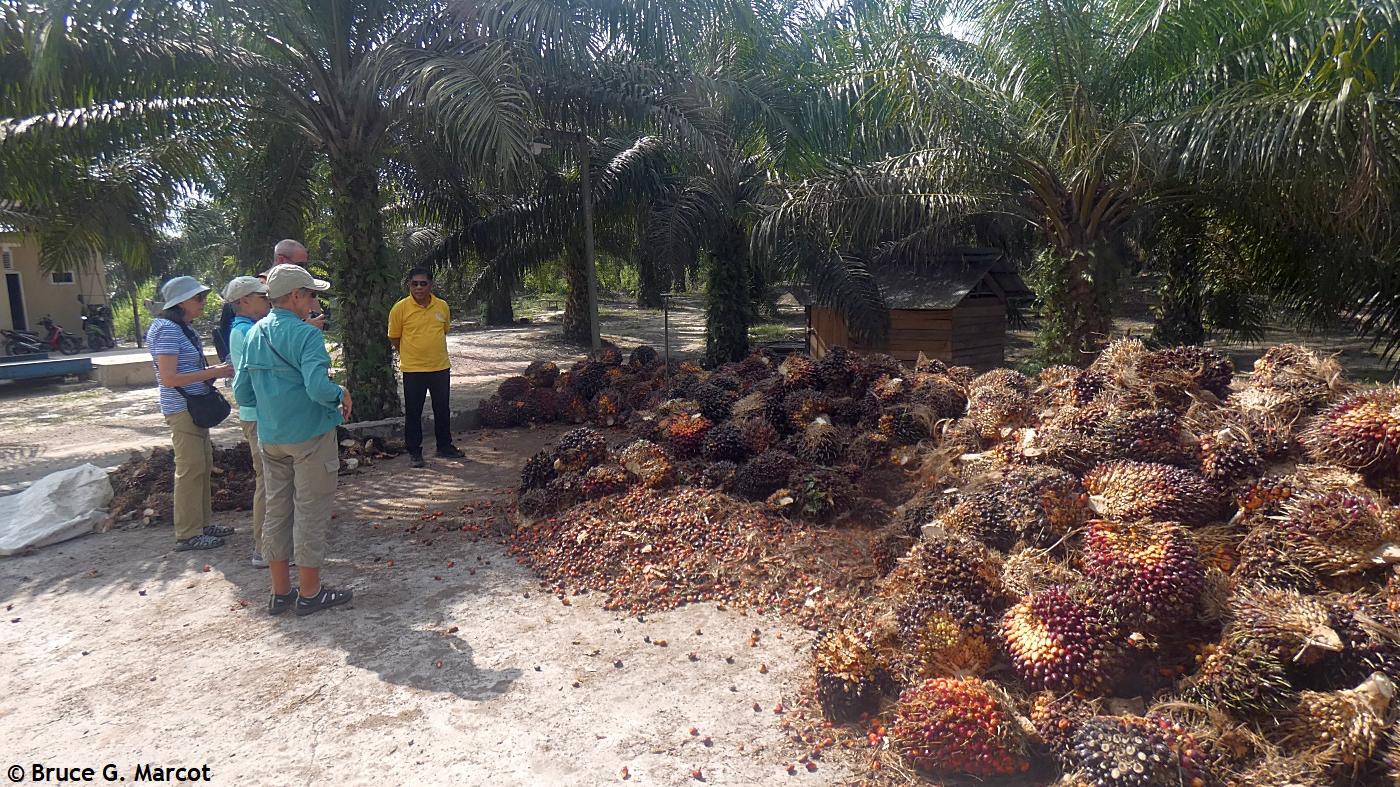
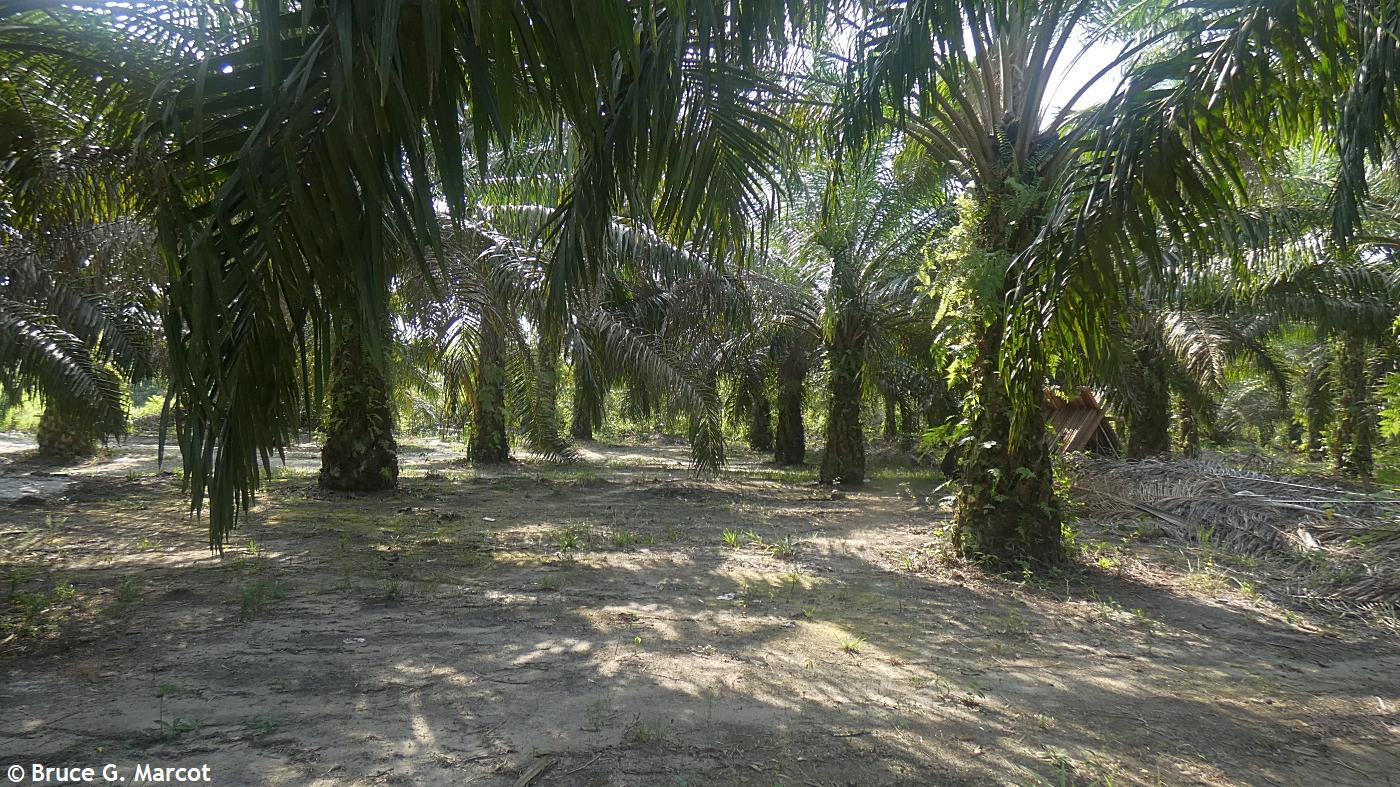
Kumai Oil Palm Plantation |
|
|
|
|
|
Kumai Oil Palm Plantation |
|
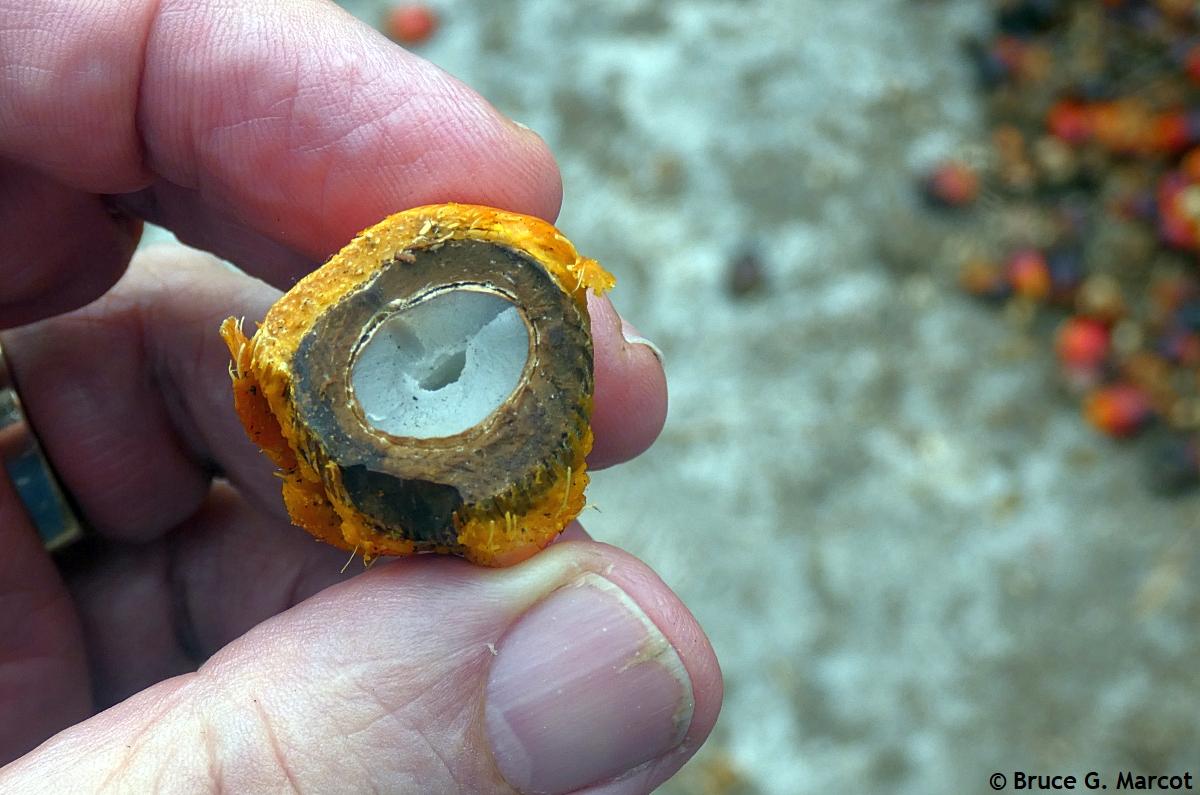
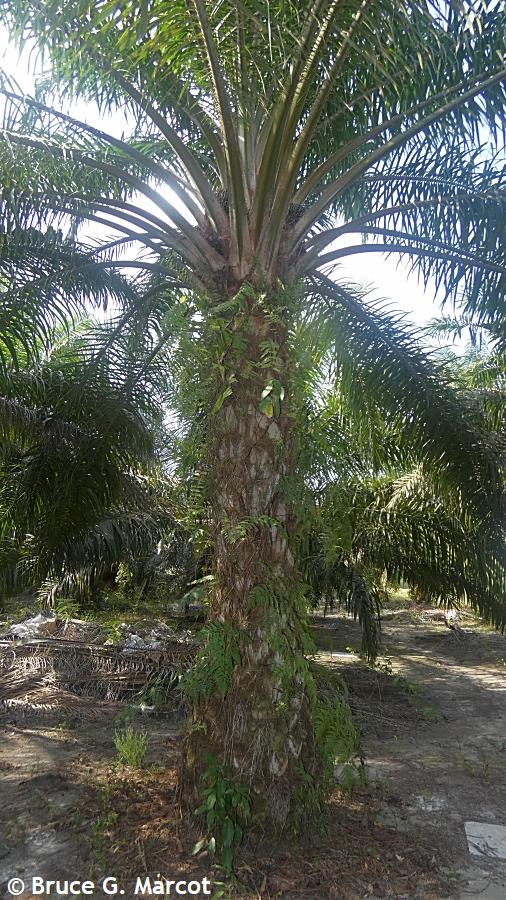
Oil Palm (Elaeis guineensis),
Family Arecaceae |
Credit & Copyright: Dr. Bruce G.
Marcot
|
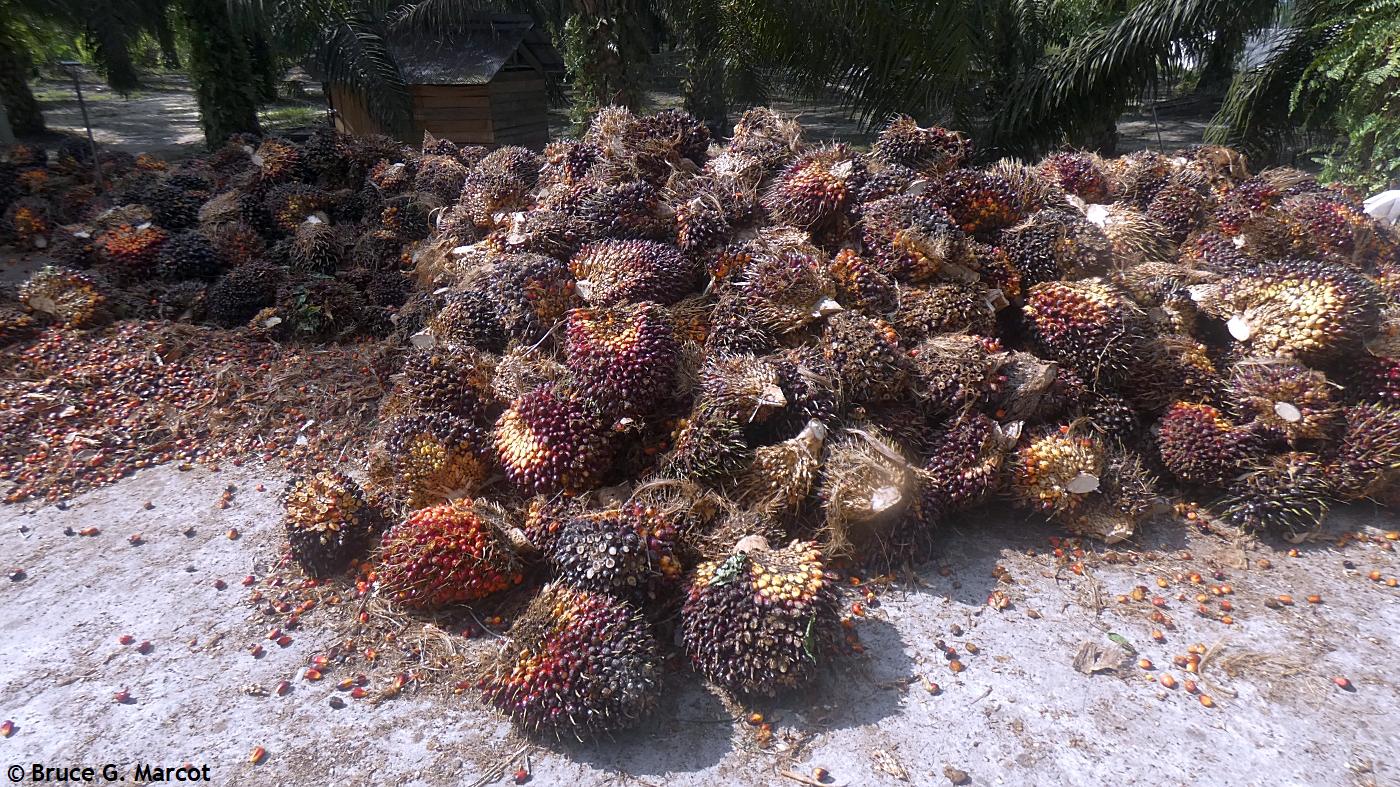
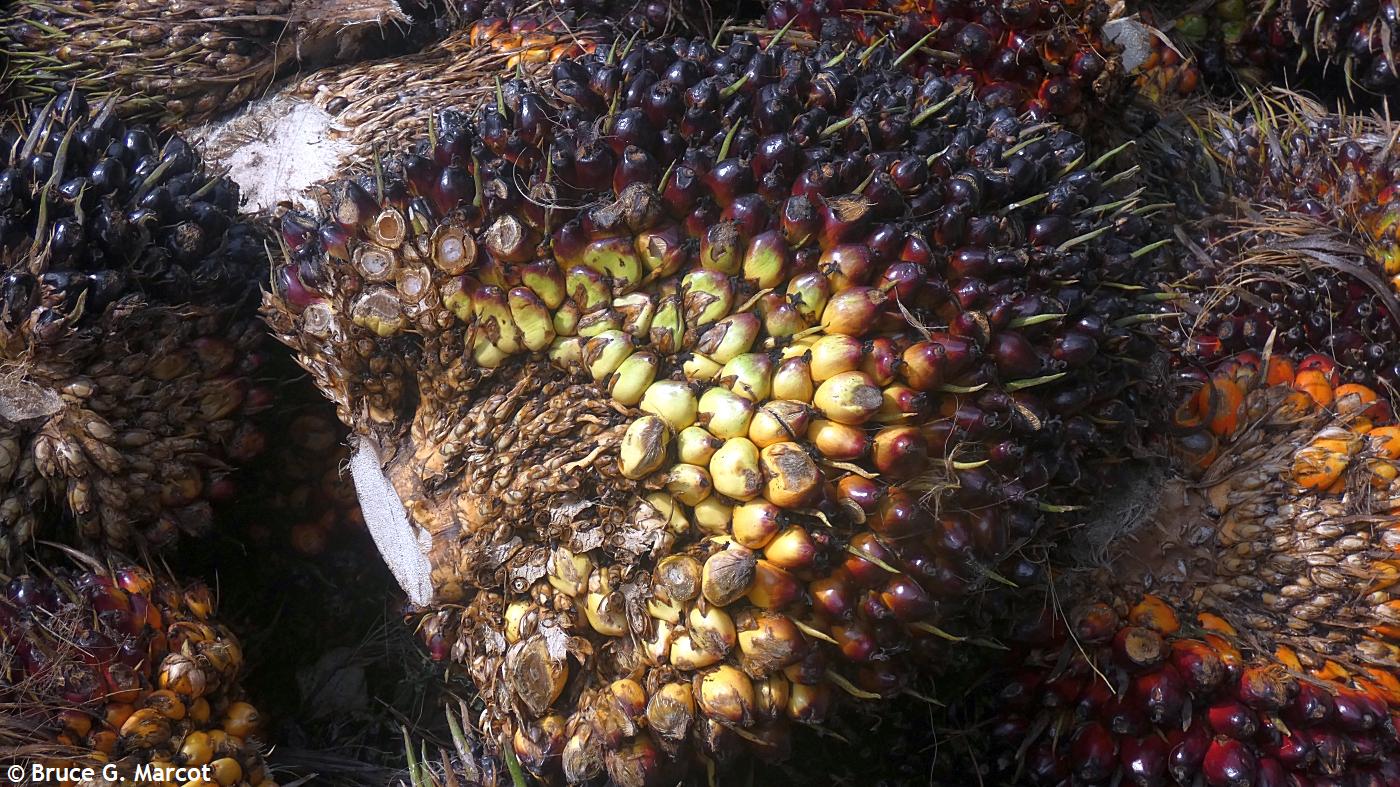
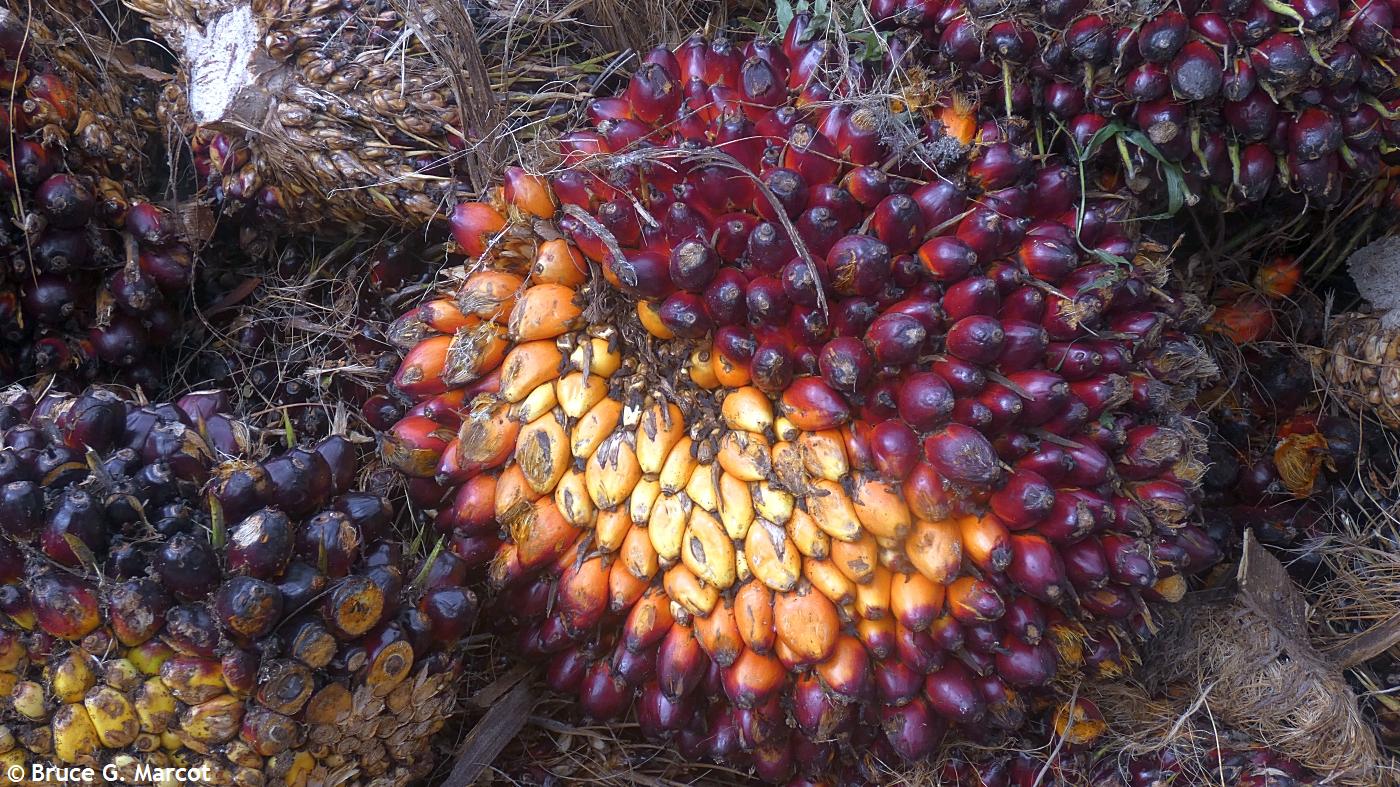
Explanation: Down toward the southern tip of the island of Boreno, Indonesia, thrives a major oil palm industry. Here, were are in of the major oil palm plantations on the outskirts of the city of Kumai, given a tour and tutorial by the owner. Oil palms are native to Africa but have been introduced to parts of southeast Asia, Central America, and elsewhere. Here, two seed heads are harvested from each tree every three years.
The trees last about 25 years, and then are cut down and replaced. However, this can be done for only four generations, or about 100 years, because after that the soil is so depleted, with very low soil pH, that nothing else will grow there. So then the plantation site as a whole is converted to building construction.
The government of Borneo has now decreed that no additional new oil palm plantations will be developed, but this does not limit the continued use of existing plantations. At present, about 60% of Borneo is government land, so this decree affects a significant portion of the Indonesian landscape there. One major concern with the massive expansion of oil palm plantations on Borneo is the reduction and fragmentation of the mature tropical rainforests serving as critical habitat to populations of Bornean orangutans. More than occasionally, orangutans have been observed venturing into oil palm plantations where they are sometimes captured and transferred back into their shrinking native forest environment. At present, the overall population of orangutans on Borneo and Sumatra has been reduced to less than 60,000 individuals. They remain a key part of the tourism industry.
|
Next week's picture: White-faced Heron
< Previous ... | Archive |
Index |
Location | Search | About EPOW | ... Next >
Google Earth locations
shows all EPOW locations;
must have Google Earth installed
Author & Webmaster: Dr. Bruce G. Marcot
Disclaimers and Legal Statements
Original material on Ecology Picture of the Week © Bruce G. Marcot unless denoted otherwise