|
||
|
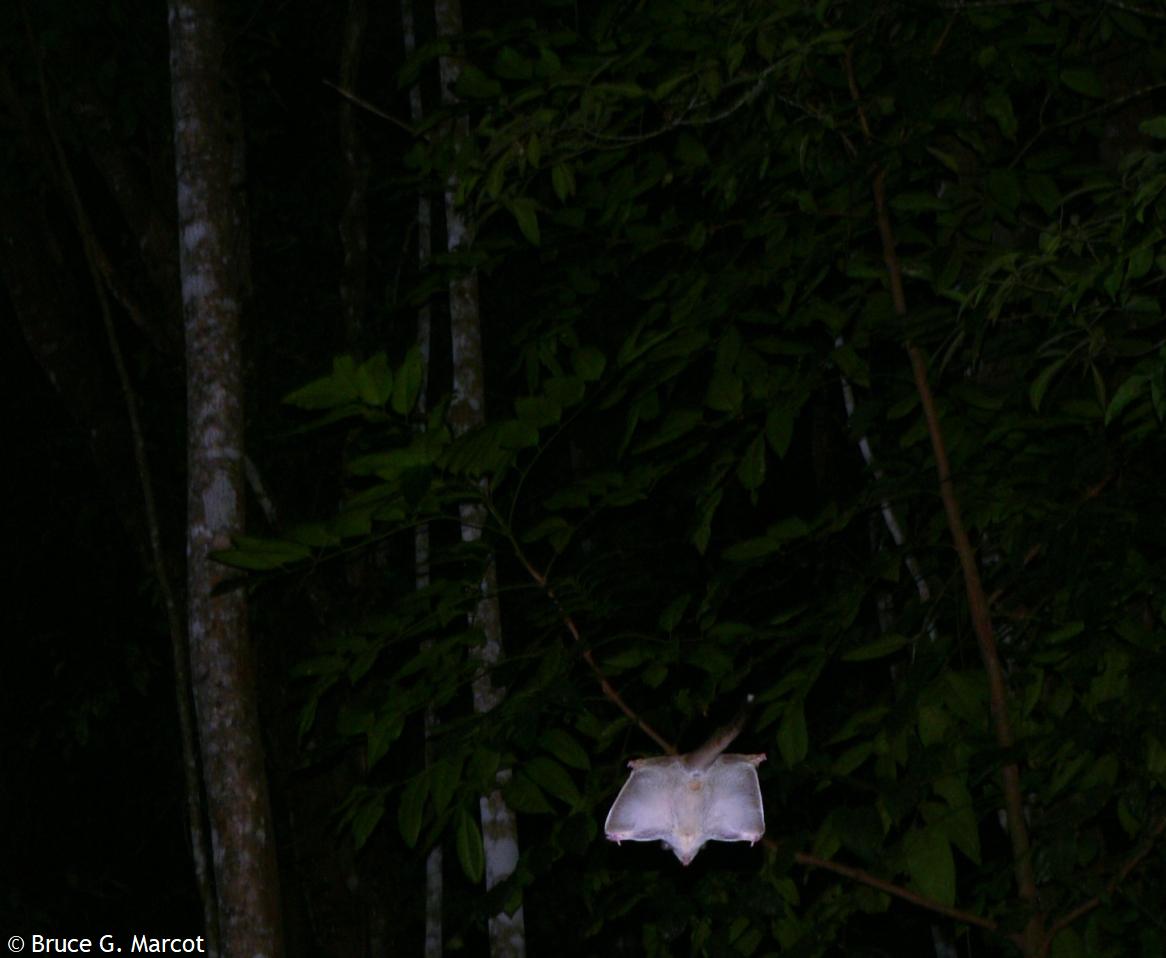
Sugar Glider |
|
|
|
||
|
Sugar Glider |
|
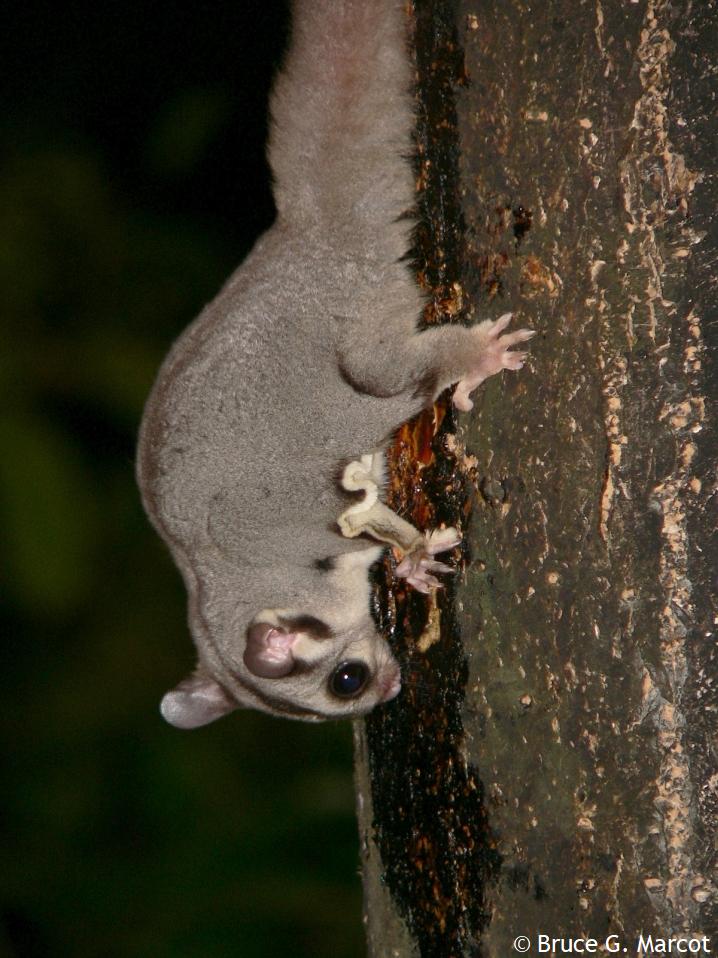
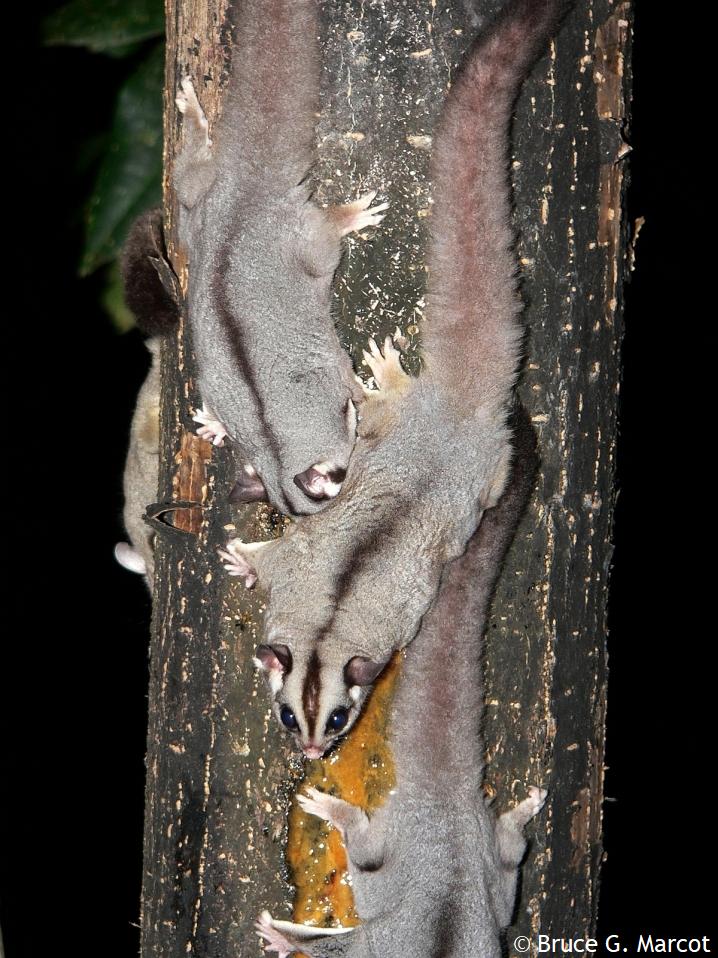
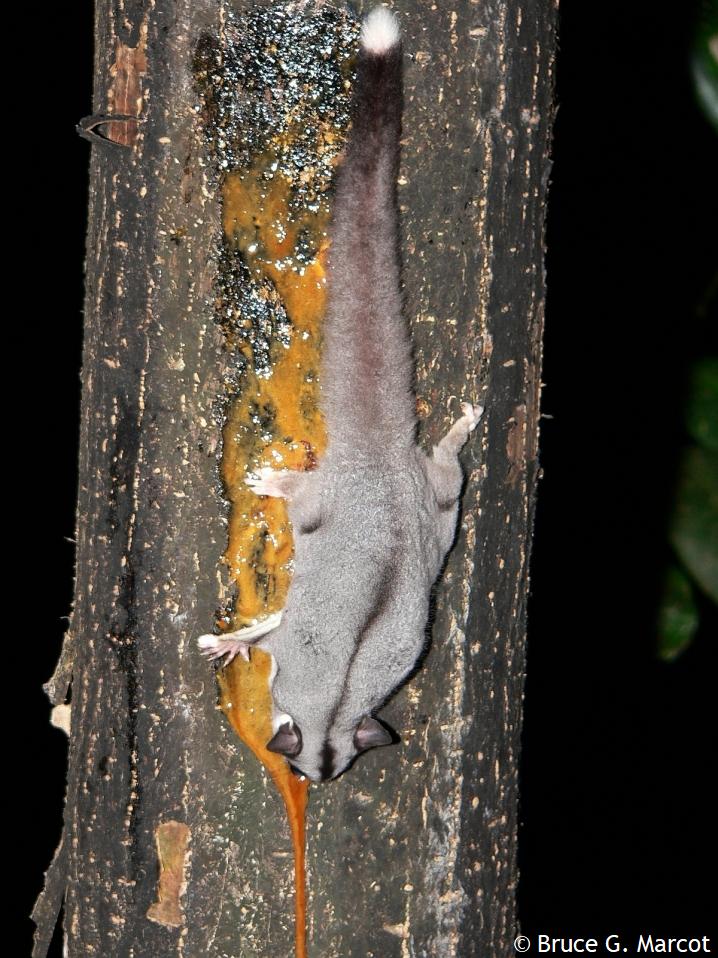
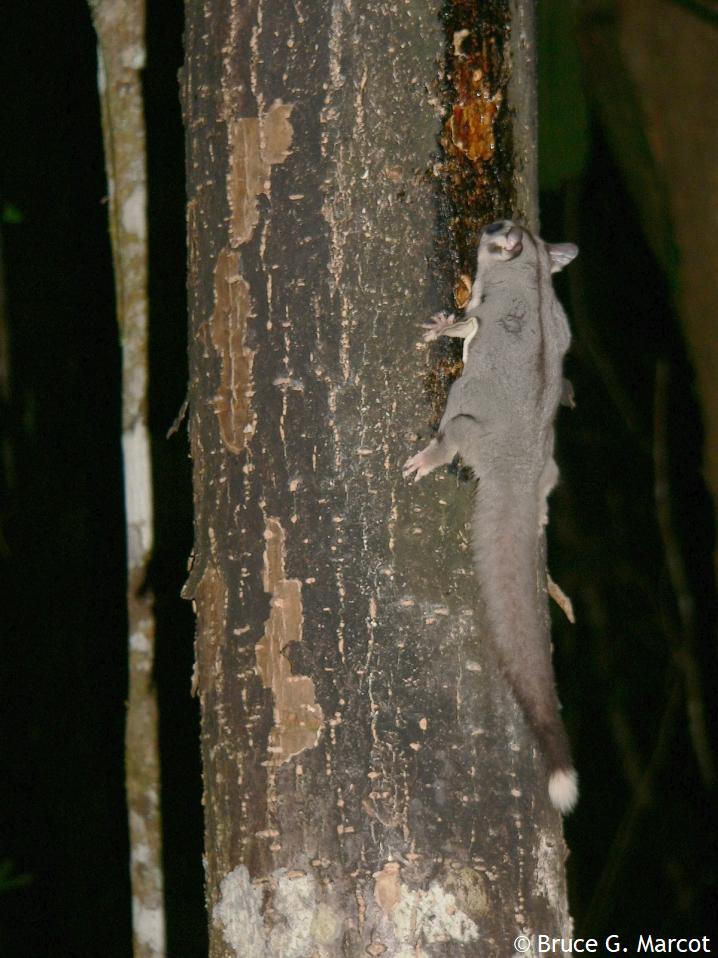
Sugar Glider (Petaurus breviceps),
Family Petauridae |
Credit & Copyright: Dr. Bruce G.
Marcot
|
Explanation: One night, while exploring the rainforests of Queensland, northeast Australia, with two mates, we happened upon this acadia tree greatly oozing its sap. And soon that attracted a small bundle of sap-feeders. No, not sapsuckers (there are no woodpeckers in Australia), but sugar gliders. Sugar
gliders are largely nocturnal and arboreal marsupials, where they can scamper along the vertical
surfaces of sap-seeping tree trunks. They wield opposable digits on both
front and hind feet, making their grasps of the corrugated tree bark secure
as they feed facing either direction along the trunks.
Sugar gliders do feed on a wide variety of other fare, including insects, spiders, pollen, nectar, and more. At first glance, you might mistake the Australian sugar gliders for American flying squirrels. Both have a form of thin, stretched skin (patagium) between front and hind legs that they can use for gliding from tree to tree. But sugar gliders belong to a totally different order of mammals, the Diprotodontia, than do flying squirrels, the Rodentia.
According to one source (Menkhorst
and Knight 2004), sugar gliders can glide up to 90
meters (nearly 300 feet, the length of an American football field, goal line
to goal line!), although 50 meters (164 feet) is more commonly cited. But without more-or-less contiguous tree canopy cover,
populations can get isolated as forests become fragmented.
|
Next week's picture: Skimmer on My Boot
< Previous ... | Archive |
Index |
Location | Search | About EPOW | ... Next >
Google Earth locations
shows all EPOW locations;
must have Google Earth installed
Author & Webmaster: Dr. Bruce G. Marcot
Disclaimers and Legal Statements
Original material on Ecology Picture of the Week © Bruce G. Marcot unless denoted otherwise